Buyer Summary

Potassium sorbate is a food preservative commonly evaluated for yeast and mold control in suitable acidic beverages. It is identified internationally as INS 202 and in the European Union as E202. The ingredient name does not, however, determine whether it will protect a particular drink. Finished-product pH, titratable acidity, formula composition, initial microbial load, heat process, hygienic controls, package and storage conditions all influence the result.

A professional purchase starts with the beverage rather than a generic addition rate. Buyers should define the product and destination market, review a signed specification and representative Certificate of Analysis (COA), compare candidate material on a common analytical basis, and validate the complete preservation system through an appropriate microbiological and shelf-life program. The specification confirmed by both parties and the batch COA issued for the shipment govern the order.

  • Confirm the finished beverage pH and process—not only the concentrate pH.
  • Define the spoilage organisms and shelf-life conditions that matter to the product.
  • Agree the exact food-grade standard, test methods, particle form and documentation.
  • Check dissolution and addition sequence in the real syrup or beverage process.
  • Verify current authorization, use conditions and labeling in the destination market.

Product Identity

The WHO JECFA database identifies potassium sorbate as the potassium salt of trans,trans-2,4-hexadienoic acid, assigns INS 202 and lists its functional class as preservative. The FAO JECFA compendium provides a potassium sorbate specification monograph. These references establish identity and purity context; they do not describe the performance of every commercial lot in every beverage.

Commercial food-grade potassium sorbate may be supplied in granular or powder form. Particle profile can affect dusting, feeding, wetting and dissolution time, while packaging and storage history can affect physical condition. The quotation should identify the actual grade and manufacturing source offered. Do not assume that two products are interchangeable solely because both carry the name potassium sorbate.

Beverage application specialist comparing sealed drink samples in a controlled shelf-life trial
Preservative approval should be based on the actual beverage, process, package and storage conditions—not a dosage copied from another formula.

Beverage Fit

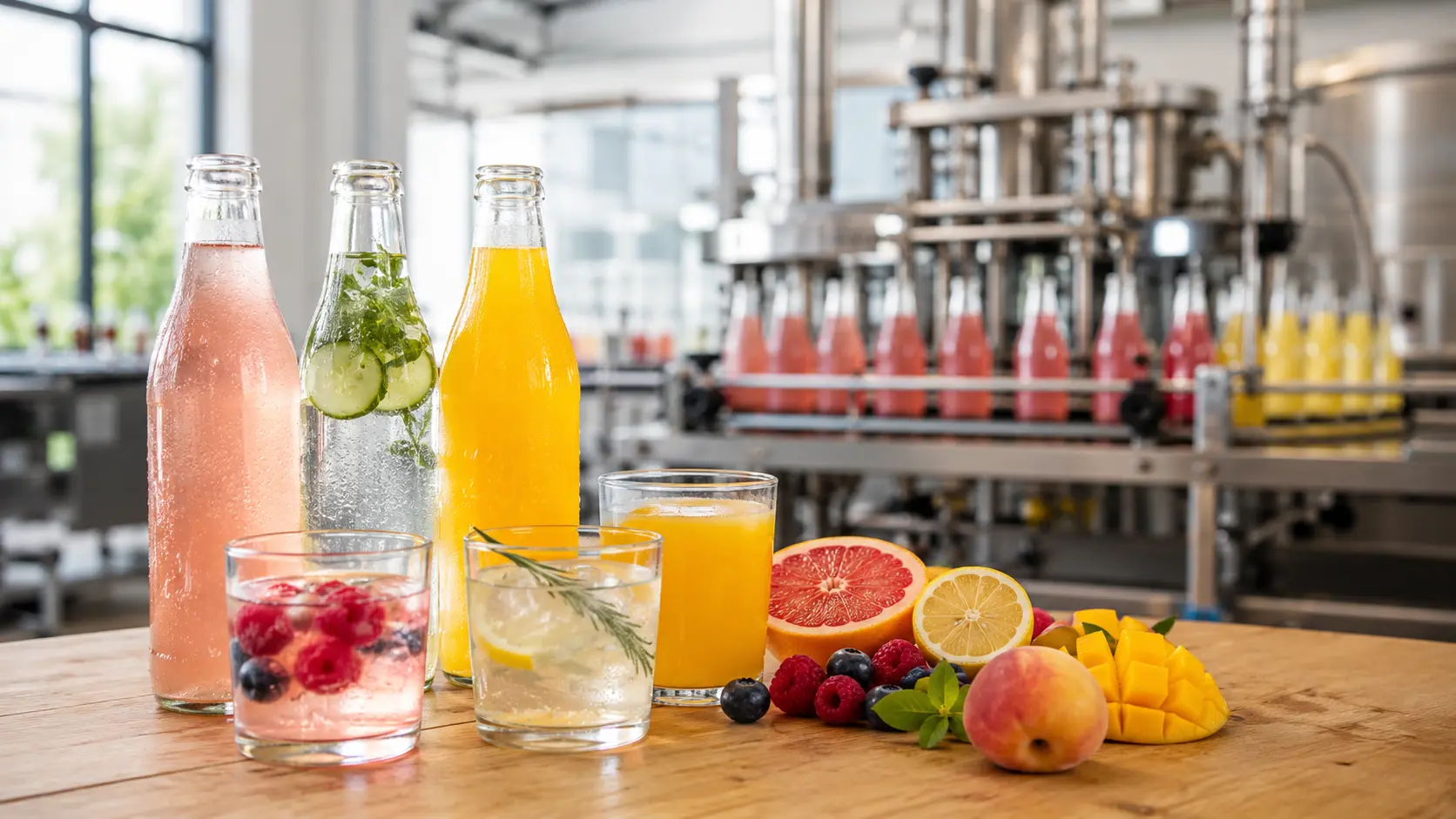
Potassium sorbate is often considered for fruit drinks, juice-containing beverages, flavored waters, syrups, concentrates, tea-based drinks and other acidified beverage systems where yeast and mold are relevant spoilage concerns. Suitability cannot be inferred from the beverage category alone. A still drink, hot-filled juice beverage, cold-filled flavored water and post-mix syrup present different contamination routes, oxygen exposure, process lethality and storage risks.

It is not a substitute for hygienic design, validated heat treatment, clean filling, package integrity or cold-chain control where those measures are required. It also should not be treated as a universal answer to bacteria, yeast and mold at the same time. The preservation plan must be built around the organisms reasonably expected in the actual product and manufacturing environment.

  • Finished beverage type, juice or pulp content and carbonation
  • Hot fill, tunnel pasteurization, aseptic, cold fill or other process
  • Package material, closure system, headspace and expected oxygen exposure
  • Ambient, chilled or temperature-abuse storage conditions
  • Target shelf life and distribution route

pH and Preservation

Sorbate preservation is pH dependent because the undissociated acid form is important to antimicrobial activity. As the beverage becomes less acidic, the same nominal amount should not be expected to deliver the same protection. This is why a supplier cannot responsibly recommend one universal use level without the finished-product conditions.

Measure pH with a calibrated instrument after the beverage reaches its final composition and, where relevant, after processing and equilibration. Titratable acidity also matters to sensory balance and acid reserve, but it is not interchangeable with pH. Buffer salts, mineral content, fruit solids, proteins and other ingredients can change the acid system and should be included in the application trial.

Do not lower pH or increase preservative solely to force a laboratory result. The final formula must still meet sensory, labeling, nutritional, packaging and market requirements. Establish the preservation target with the beverage technologist and qualified microbiological or regulatory support.

Dissolution and Addition

Potassium sorbate is selected in many liquid applications partly because it is easier to incorporate into water-based systems than sorbic acid. Even so, dissolution is not automatic in a cold, concentrated syrup or a process with short mixing time. Water temperature, concentrate solids, agitation, addition point, competing dry ingredients and time before acidification can all affect incorporation.

A practical trial records where the ingredient is added, the available water, mixing speed, temperature, dissolution time and the point at which acids, flavors, colors and other ingredients enter the batch. Inspect for undissolved particles, local concentration, deposits and filter retention. If a premix or stock solution is used, define its preparation, holding time and handling controls in the plant procedure.

  • Confirm granular or powder form and the buyer’s feeding method.
  • Trial dissolution in the real water and concentrate composition.
  • Record temperature, agitation, addition order and available mixing time.
  • Check filters, transfer lines and tank bottoms for retained material.
  • Verify the finished beverage rather than judging only a clear laboratory solution.

Application Trial

Preservative screening should use the commercial formula, plant-representative process and intended package. Keep raw-material lots, water, processing, fill conditions and storage temperatures controlled when comparing candidates. Record initial pH, post-process pH, fill temperature, closure condition, headspace and any changes during storage.

A shelf-life study based only on visual clarity or routine plate counts can miss relevant risk. The manufacturer should design the microbiological program around the beverage and applicable standards, including appropriate spoilage organisms, sampling points, storage conditions and acceptance criteria. Challenge testing should be planned and interpreted by qualified personnel; a supplier sample or COA cannot replace it.

Evaluate sensory quality alongside microbiology. Excess or poorly integrated preservation can affect flavor perception, while product changes during storage may alter color, aroma, sediment or package condition. Confirm the preferred formula in more than one pilot batch and at commercial scale before release.

  • Use representative raw materials, processing and final packaging.
  • Include normal and justified temperature-abuse conditions where relevant.
  • Set microbiological and sensory acceptance criteria before the study begins.
  • Track pH, appearance, flavor and package condition through shelf life.
  • Retain an approved reference and documented production samples.

Specification Review

The purchase specification should identify potassium sorbate, the selected food-grade standard and the analytical methods used. Relevant review items can include identification, assay, loss on drying or moisture, acidity or alkalinity, aldehyde-related criteria, relevant toxic elements and other purity requirements from the applicable standard. The exact list and limits must be drawn from the standard agreed for the order, not assembled from unrelated online tables.

Method and reporting basis matter. A percentage result should state whether it is reported on a dry basis or as received when the standard distinguishes the basis. If particle size is commercially important, add a measurable sieve distribution and method. Appearance descriptions such as powder or granule should match the material approved in the application and handling trial.

  • Exact product identity and manufacturing source offered
  • Applicable food-grade standard and specification revision
  • Assay basis and referenced analytical method
  • Moisture or loss-on-drying test and reporting basis
  • Particle form and sieve profile when required
  • Agreed purity, contaminant and customer-specific criteria

COA and Documents

During qualification, request a signed product specification and a representative COA. For shipment, the batch COA should identify the exact product, lot, specification revision, test items, limits, actual results, methods or referenced standard and release authorization. A document showing only ‘pass’ without the agreed basis gives the buyer less information for lot review.

The Technical Data Sheet supports product handling and general application review, while the Safety Data Sheet supports safety communication; neither replaces the batch COA. If origin, allergen, GMO, Halal, Kosher or food-safety-system documents are required, confirm that each document covers the actual product, plant and validity period offered. Availability varies by manufacturer and production source.

  • Signed product specification and representative COA
  • Batch-specific COA for the shipment
  • TDS and SDS where applicable
  • Origin, allergen, GMO and production-route statements when required
  • Product- and site-specific certificates requested by the buyer
  • Packing declaration, lot coding and shelf-life documentation

Packing and Storage

Confirm the food-contact inner liner, outer bag or carton, seal, net weight, pallet pattern and container-loading plan in the quotation. Pack sizes and construction vary by producer; no website description should be treated as the contractual packing specification. Inspect seals, labels, lot codes, moisture exposure and physical condition when the shipment arrives.

Store potassium sorbate according to the approved supplier documentation in a dry, controlled area away from heat, moisture, odors and contamination. Reseal partial packs promptly and use documented stock rotation. Caking, damaged liners or inconsistent flow can affect plant handling even when chemical identity remains unchanged, so warehouse condition forms part of incoming control.

Regulatory Check

The FAO/WHO Codex Alimentarius General Standard for Food Additives publishes food-category provisions for sorbates, and some limits are expressed as sorbic acid equivalents. The United States lists potassium sorbate in 21 CFR 182.3640 as generally recognized as safe when used in accordance with good manufacturing practice. European Union authorization and E202 specifications are governed through separate legislation. These frameworks do not create one worldwide permission or one universal beverage use level.

For European Union supply, Regulation (EU) 2024/2597 amended both certain use provisions and specifications for sorbic acid and potassium sorbate, with parts of the specification amendments applying from April 27, 2025. Buyers should use the current consolidated EU texts and confirm evidence against the requirements applicable to the exact product and placing-on-market date.

Before commercial use, verify the finished-food category, maximum level or good-manufacturing-practice condition, calculation basis, carry-over rules and label declaration in the destination market. The beverage manufacturer or importer remains responsible for the finished product. Supplier documents support that assessment but do not replace it.

Inquiry Checklist

For a useful quotation, send the beverage type, finished pH, process, package, destination country, target shelf life, current grade or benchmark, trial or annual quantity, packing and required documents. If an existing product is approved, attach its specification or a recent COA with commercially sensitive information removed so potential supplies can be compared on the same basis.

SunShare can review the inquiry against available food-grade potassium sorbate options and supporting documentation. Final use level and preservation design must be confirmed through the beverage manufacturer’s application, microbiological, shelf-life and regulatory work. The actual order remains governed by the specification confirmed by both parties and its batch-specific COA.

  • Beverage type, finished pH and relevant spoilage concerns
  • Process, fill condition, package and storage temperature
  • Current reference grade, specification and test methods
  • Trial quantity, annual volume, packing and Incoterm
  • Destination market and required declarations or certificates
  • Target shipment timing and sample requirement

Related Products

Potassium SorbatePreservativesPotassium Sorbate for BeveragesQuality & DocumentationContact SunShare

Technical References

Regulatory databases and research can change. Check the current source and the destination market before commercial use.